
How Much Should Roofing Sales Reps Save Per Deal?
Apr 09, 2026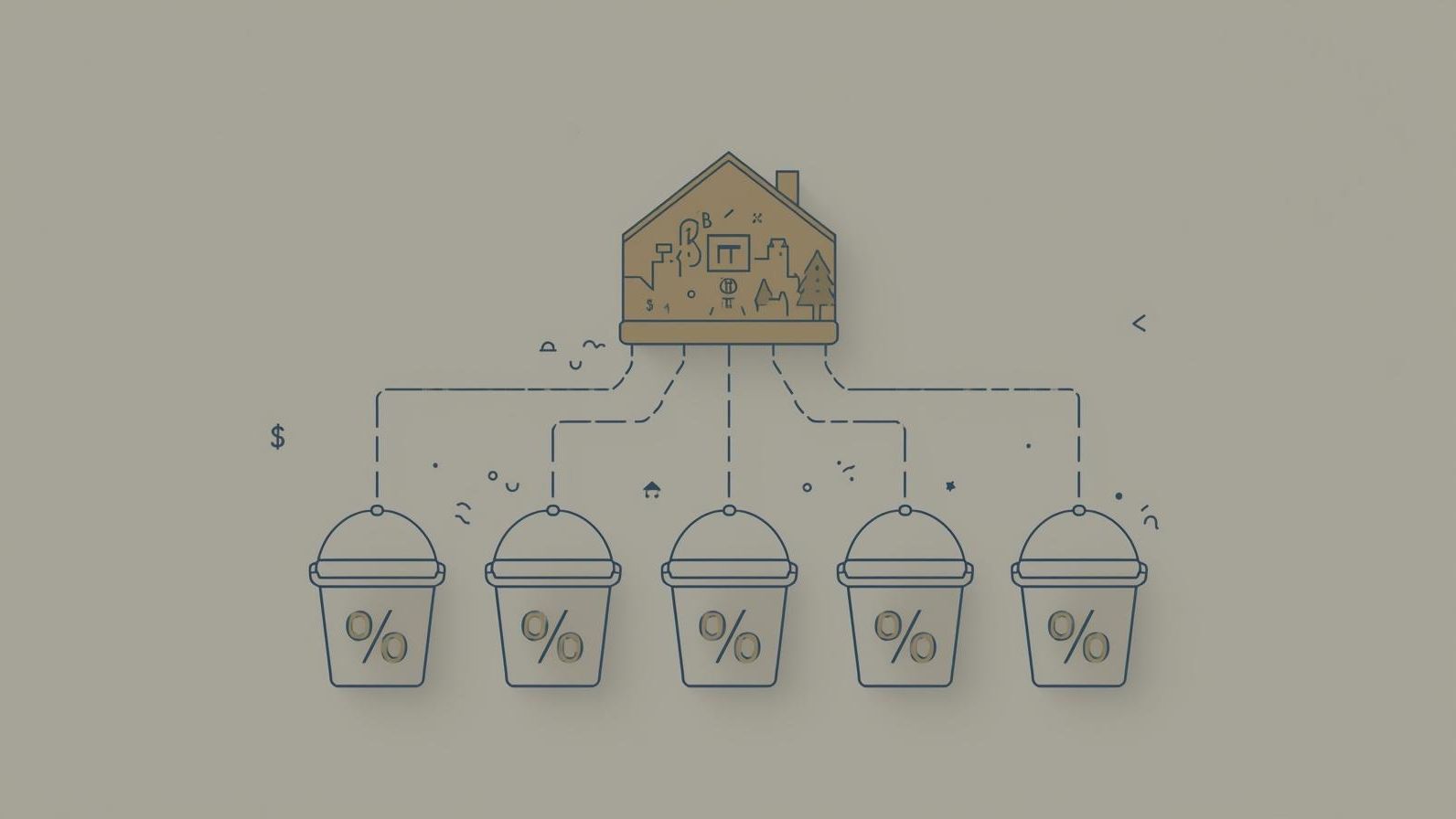
Here's something I've noticed after years of working with commission earners: most roofing sales reps don't have an income problem. They have an allocation problem.
I've watched guys close $15,000, $20,000, even $30,000 commission months and still end up stressed and scrambling two months later. Not because they weren't grinding. Not because the deals weren't there. But because when the money hit, there was no plan waiting for it.
"I'll save what's left over" is the most common — and most expensive — money strategy in roofing sales. Because here's what always happens: there's never anything left over. Spending expands to fill whatever's available, every single time.
The fix isn't complicated. It's actually pretty simple. You need a percentage-based system that tells every dollar where to go before you spend a single one of them. Not after. Before.
That's what this guide is. A clear, practical breakdown of exactly how much you should be saving per deal — and how to build a system that works whether you just closed a $3,000 job or a $30,000 one.
Why "Saving What's Left" Keeps You Broke
Let me explain why the leftover approach fails, because it's not just a discipline issue — it's a structural one.
When you decide to "save what's left," you're essentially putting savings last. Which means every other spending decision gets to go first. And spending, especially after a big commission hits, has a way of expanding to fill whatever's available. New gear, nicer dinners, an impulse purchase or two — none of it feels reckless in the moment. But by the end of the month, the "leftover" is gone.
This is lifestyle inflation in its most common form. Strong month comes in, standard of living quietly ticks up, and savings becomes optional. And optional savings almost never happens consistently.
High earners struggle financially all the time for exactly this reason. Income isn't the problem — structure is. Without a pre-committed system, every commission check becomes a reactive decision instead of a planned one. And reactive money management is how good earners stay financially stuck.
Want to go deeper on building a full budgeting system around your commission income?
Check out our complete guide: How to Budget With Commission Income (Step-by-Step) — it covers everything from setting your baseline income to navigating slow months without stress. It's the foundation this percentage system sits on, and reading both together will give you the full picture.
The Shift: Every Deal Needs a Job
Here's the mindset change that makes everything else work: stop treating your commission check like a reward and start treating it like a system.
A reward gets spent. A system gets allocated.
Before a single dollar gets touched — before you pay a bill, before you buy anything — the percentages get assigned. Needs get their cut. Taxes get their cut. Wealth building gets its cut. Then, and only then, does lifestyle spending happen. Guilt-free, because it was planned.
This does something really valuable beyond just the math: it removes decision fatigue. You're not figuring out what to do with every check. The system already decided. You just follow it. And when you don't have to make a fresh decision every month about how much to save, you actually save consistently.
That consistency — across big months and small ones — is where real financial momentum comes from.
The Core Percentage-Based System (Your Blueprint)
Here's the actual framework. These aren't arbitrary numbers — they're ranges that flex based on your situation, but the structure stays the same every single time.
Needs: 50–60% Housing, food, transportation, insurance, minimum debt payments. The non-negotiables. And here's the key: this percentage should be calibrated to your baseline income — your lowest consistent earning months — not your biggest deal. If your needs are eating 60% of a $4,000 month, they should still only be eating 60% of a $12,000 month. The extra doesn't automatically go to lifestyle.
Wealth Building: 15–25% This is your future. Index funds, retirement accounts, real estate savings, extra debt payoff — anything that builds your net worth over time. Think of this as paying your future self before your present self gets a vote.
Taxes: 15–30% Non-negotiable, and it goes into a separate account the moment the check hits. If you're 1099, lean toward 25–30%. W-2 with commission? Check your withholding and adjust accordingly. This money isn't yours to spend — treat it that way from day one.
Lifestyle: 10–20% This is your fun money. Travel, eating out, upgrades, entertainment. And here's the thing — spend it. Fully and guilt-free. Because it's planned. A system that never lets you enjoy life is a system you'll abandon.
So… How Much Should You Save Per Deal?
Let's make this concrete with real numbers.
Your minimum savings target — wealth building only, not counting taxes — should be 15–25% of every commission check. If you're in aggressive wealth-building mode, aim for 25–40% during strong months.
Here's what that looks like on a $10,000 commission:
- $5,000–$6,000 → Needs (50–60%)
- $2,000–$2,500 → Wealth building (20–25%)
- $2,000–$2,500 → Taxes (20–25%)
- $1,000–$1,500 → Lifestyle (10–15%)
On a $5,000 commission, the percentages stay identical — the dollar amounts just scale down. That's the whole point. The system works regardless of check size because it's built on proportions, not fixed numbers.
What matters more than any single big save is the savings rate held consistently over time. A rep saving 20% of every check for five years will build more wealth than one who saves aggressively for two months and then blows it during a good stretch.
What This Looks Like in Real Life
Small deal comes in — say $2,500. You still run the percentages. Taxes go to the tax account, wealth building goes to savings or investments, needs are covered, lifestyle gets its slice. Nothing about the process changes just because the number is smaller.
Big deal hits — $18,000 month. Same percentages, bigger numbers. And that extra wealth-building allocation? It doesn't go to lifestyle. It goes to your buffer, your investment account, or your next financial goal. The system scales up without letting lifestyle inflate with it.
What this removes is the monthly guessing game. You're not sitting there every time a check hits wondering "how much should I put away this time?" The answer is always the same. The percentages already decided. That repetition builds a financial habit that gets automatic over time — and automatic beats motivated every single time.
How to Increase Your Savings Rate Over Time
If 15% feels tight right now, start there. Seriously. A consistent 15% beats an inconsistent 30% in the long run — always.
Once 15% feels normal — once you've adjusted your lifestyle to live without that slice — bump it to 18%. Then 20%. Then push toward 25% when income grows. The goal is to use income increases to boost your savings rate, not your lifestyle. Every time you close bigger deals or have a stronger season, the first question should be "how much more can I save?" not "what can I upgrade?"
Your first milestone is consistency, not perfection. If you miss a month or allocate wrong during a chaotic stretch, don't scrap the system — just reset next check. The reps who build real wealth aren't the ones who never slip. They're the ones who keep coming back to the system.
Common Mistakes Roofing Sales Reps Make
These are worth naming plainly because they're everywhere:
Only saving during big months. The whole point of a percentage system is that it runs on every check. Small months included. Consistency is the engine.
Ignoring taxes completely. Spending 100% of a commission check and facing a five-figure tax bill in April is a crisis that's entirely preventable. Separate tax account, every check, no exceptions.
Inflating lifestyle too fast. When income goes up, lifestyle spending should stay roughly the same — or increase only slightly. The difference goes to wealth building, not a nicer apartment.
Keeping everything in one account. If taxes, savings, and spending money all live in the same checking account, the spending money always wins. Separate accounts create separation between what's available and what's already spoken for.
Treating commission checks like bonuses. A bonus is extra. A commission check is your income. It needs a plan, not a celebration.
The Long-Term Impact of Saving Per Deal
Here's the part that makes the whole system worth it.
If you save and invest 20% of a $7,000 average monthly commission — $1,400 a month — at a 10% average annual return, you're looking at over $285,000 in 10 years. Cross that with a growing income and an increasing savings rate, and you're realistically approaching seven figures in 15 to 20 years. Not from one lucky deal. From the same disciplined system, repeated hundreds of times.
That's how compounding works. It rewards consistency more than it rewards size. The rep who invests $1,400 every month for 15 years builds more wealth than the rep who invests $10,000 twice a year and skips the rest. Every. Single. Time.
This is also how the feast or famine cycle breaks permanently. When wealth building is a fixed percentage of every check — not an afterthought — slow months don't undo your progress. They just produce smaller contributions. The habit stays intact. The momentum keeps building.
You don't need to guess how much to save. You need a system that answers that question automatically, every single time a check hits.
When every deal has a percentage plan waiting for it, your money stops disappearing and starts compounding. Not because you earned more. Because you got intentional with what you already earned.
Start with your next commission check. Decide the percentages before the money lands. Taxes go to the tax account, wealth building goes to savings or investments, and lifestyle gets what's left — planned and guilt-free.
That's the whole system. Simple, repeatable, and genuinely powerful over time.
Author